
Zero-Click Searches: How to Win Traffic Without Website Clicks
In the traditional model of digital marketing, success was often measured by one key metric: clicks. The more users who clicked on your website from search engine results, the more opportunities you had to convert them into customers. However, the landscape of search has evolved significantly. Today, a growing number of searches end without a single click.
These are known as zero-click searches, and they are reshaping the way marketers think about visibility, engagement, and success. While it may seem counterintuitive, zero-click searches are not necessarily a loss. In fact, when approached strategically, they can become a powerful tool for building brand authority and capturing user attention.
What Are Zero-Click Searches?
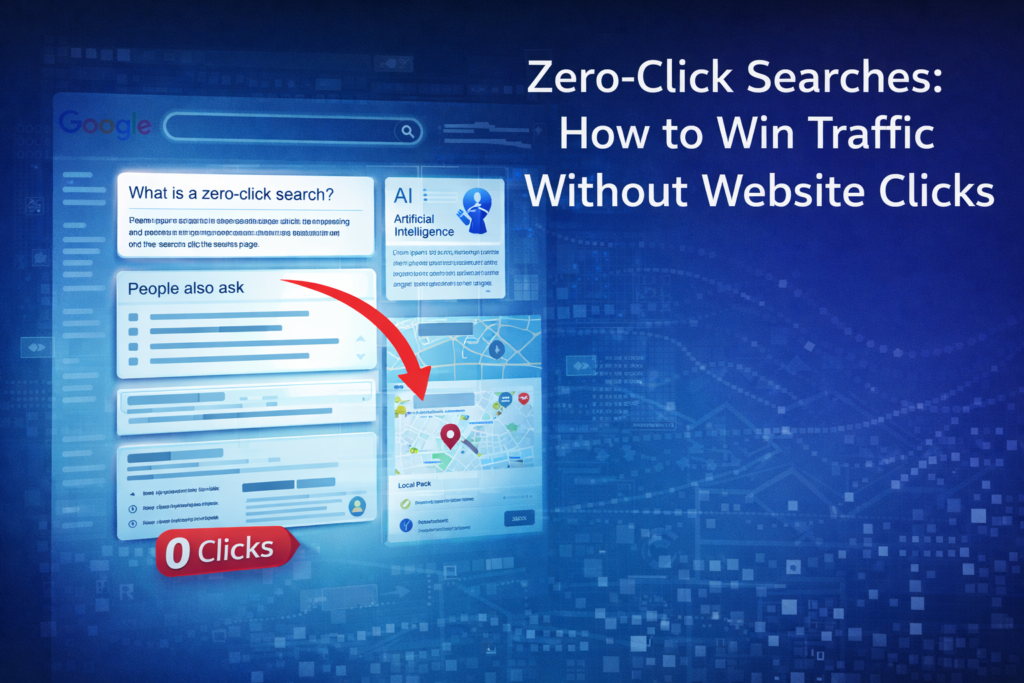
Zero-click searches occur when users find the information they need directly on the search engine results page (SERP), without clicking through to any website. Search engines, particularly Google, now provide immediate answers through features such as featured snippets, knowledge panels, local packs, and “People Also Ask” sections.
For example, if a user searches “weather today” or “what is digital marketing,” the answer is often displayed instantly at the top of the page. The user gets what they need without visiting any external site.
This shift is driven by the search engine’s goal to enhance user experience by delivering fast, relevant, and concise answers.
Why Zero-Click Searches Are Increasing
The rise of zero-click searches is closely linked to advancements in search engine technology and changing user behavior. Search engines have become more sophisticated in understanding intent and delivering direct answers.
Additionally, the growing use of mobile devices and voice search has accelerated this trend. Users expect quick responses, often in a single glance or through a spoken answer. This demand for speed and convenience has pushed search engines to prioritize instant information.
As a result, a significant portion of searches now ends without a click, making it essential for marketers to adapt their strategies accordingly.
The Impact on Digital Marketing
At first glance, zero-click searches may appear to reduce website traffic. If users are not clicking through, how can businesses benefit?
The answer lies in redefining what success looks like. Visibility on the SERP is now just as important as website visits. When your content appears in a featured snippet or knowledge panel, your brand is positioned as a credible and authoritative source.
This visibility can influence user perception, build trust, and increase the likelihood of future engagement. Even without a click, your brand remains at the forefront of the user’s mind.
Winning Featured Snippets
Featured snippets are one of the most valuable opportunities in zero-click search optimization. These are the highlighted boxes that appear at the top of search results, often referred to as “position zero.”
To increase your chances of being featured, your content should provide clear and direct answers to common questions. Structuring your content with headings, short paragraphs, and lists can make it easier for search engines to extract relevant information.
For example, if your blog answers a question like “What is zero-click search?” in a concise and well-organized manner, it is more likely to be selected as a featured snippet.
Clarity, precision, and relevance are key.
Leveraging the “People Also Ask” Section
Another important SERP feature is the “People Also Ask” section. This feature presents a list of related questions that users commonly search for.
By identifying and addressing these questions within your content, you can expand your visibility across multiple search queries. Each answered question increases your chances of appearing in different parts of the search results.
Creating content that anticipates user curiosity not only improves your SEO but also enhances the overall value of your blog.
Optimizing for Knowledge Panels
Knowledge panels provide quick, factual information about brands, people, or topics. While they are often associated with well-known entities, businesses can also benefit from appearing in these panels.
Maintaining accurate and consistent information across all digital platforms is essential. This includes your website, social media profiles, and business listings.
Structured data, also known as schema markup, can help search engines better understand your content and improve your chances of being featured in knowledge panels.
The Role of Local SEO
Zero-click searches are particularly prominent in local queries. Searches such as “restaurants near me” or “best digital marketing agency in Bangalore” often display local packs with maps, reviews, and business details.
Optimizing your local presence is crucial for capturing these opportunities. Ensuring that your business information is complete and up-to-date can significantly improve your visibility in local search results.
Customer reviews, ratings, and accurate location details all contribute to stronger local SEO performance.
Creating Content That Stands Out
In a zero-click environment, content must do more than just attract clicks—it must deliver immediate value. This means focusing on high-quality, informative, and well-structured content.
Start by identifying common questions within your niche. Tools like search suggestions and keyword research platforms can help uncover what users are asking. Once identified, create content that answers these questions clearly and effectively.
Using a conversational tone while maintaining professionalism can make your content more engaging and accessible. The goal is to provide information that is both useful and easy to understand.
Balancing Visibility and Traffic
While zero-click searches emphasize visibility, it is still important to drive traffic to your website. One way to achieve this balance is by offering partial answers on the SERP while encouraging users to explore further for more detailed information.
For instance, you can provide a concise definition or summary, followed by in-depth analysis, examples, or case studies within your blog. This approach satisfies immediate user intent while creating an incentive to click through.
Calls to action, compelling headlines, and engaging introductions can also help convert impressions into visits.
The Future of Search Behavior
Zero-click searches are not a passing trend—they are a reflection of how search engines are evolving. As artificial intelligence and machine learning continue to improve, search engines will become even more capable of delivering precise, context-aware answers.
This means that competition for visibility on the SERP will intensify. Businesses that focus on quality, relevance, and user intent will be better positioned to succeed.
Adapting to this new reality requires a shift in mindset. Instead of viewing zero-click searches as a threat, marketers should see them as an opportunity to expand their reach and influence.
Conclusion
Zero-click searches are transforming the digital marketing landscape. While they may reduce traditional website clicks, they open new avenues for brand visibility and authority.
By optimizing for featured snippets, leveraging SERP features, enhancing local SEO, and creating high-quality content, businesses can thrive in this evolving environment.
Success in modern SEO is no longer defined solely by clicks. It is defined by presence, relevance, and the ability to meet user needs instantly. Those who embrace this shift will not only remain competitive but will also lead the way in the future of search.